Contents
A car headliner sags because the thin foam layer between the fabric and the rigid headliner board breaks down with age and heat. The fabric itself is usually fine – it simply has nothing left to hold on to. That is why pins, spray glue and staples only buy time. The lasting fix is to take the headliner out, strip off the old fabric and crumbled foam, and bond new foam-backed headliner fabric with heat-resistant adhesive. At our workshop in Blagoevgrad this usually takes 3–5 working days.
Why headliners sag
Whether you call it the headliner or the roof lining, almost every one is built the same way: a rigid moulded board, a thin layer of foam, and fabric on top. The foam gives the soft, even surface, and adhesive holds it to the board.
Over the years the foam ages. Heat, sunlight and moisture make it lose its elasticity until it turns into a fine yellowish powder. The fabric then comes away with a thin crust of that foam and starts to droop – usually first above the rear window, around the sunroof or in the middle of the roof, and then the sag spreads.
The more a car sits in the sun, the faster this happens – heat is exactly what old foam cannot take.
It is not “bad glue”
A common belief is that the glue has failed. In fact the adhesive often still holds to the board – it is the foam that has crumbled. Glue the old fabric back and you are gluing it to dust, not to a sound surface. That is why re-gluing the same fabric never lasts.
Quick fixes and why they don’t last
- Pins and twist pins. They hold the fabric at single points, but it keeps sagging in waves between them. They leave holes and, if forced, can crack the board.
- Spray adhesive from below. It soaks through the fabric and leaves dark stains and hard patches that will not clean off. It is sprayed onto crumbling foam, so it holds poorly and often lets go again in the next heatwave.
- Staples. Visible, they can crack the board and rarely hold in the thin material for long.
- Double-sided tape and hook-and-loop strips. Usually gone with the first hot days.
- Hairdryer, steam or an iron. Heat can briefly reactivate the old glue, but the foam underneath is the same and the fabric drops again – sometimes with scorch marks.
If you need to get through a few weeks before the repair, a few pins are the lesser evil: they don’t stain and don’t make the later work harder. Keep safety in mind too – a drooping headliner can block your view through the rear window.
The proper repair
A proper repair does not patch the old fabric – it replaces the covering on the original board:
- Photos and a quote. You send photos of the headliner, the make, model and year, and tell us whether the car has a sunroof or panoramic roof. We reply with an estimate and book a date.
- Removal. Grab handles, interior lights, sun visors and, if needed, pillar trims come off. The headliner board comes out in one piece, usually through a door or the tailgate. Plastic clips on older cars are brittle, so we take our time. Curtain airbags often run along the pillars, so those trims need care – see airbags in the interior.
- Back to a clean board. The old fabric is peeled off and the crumbled foam is scraped and brushed away until the board is clean and dry. This is the slowest and most important step – the new adhesive needs a sound surface. If the board is cracked or warped, this is where it shows and gets dealt with before gluing.
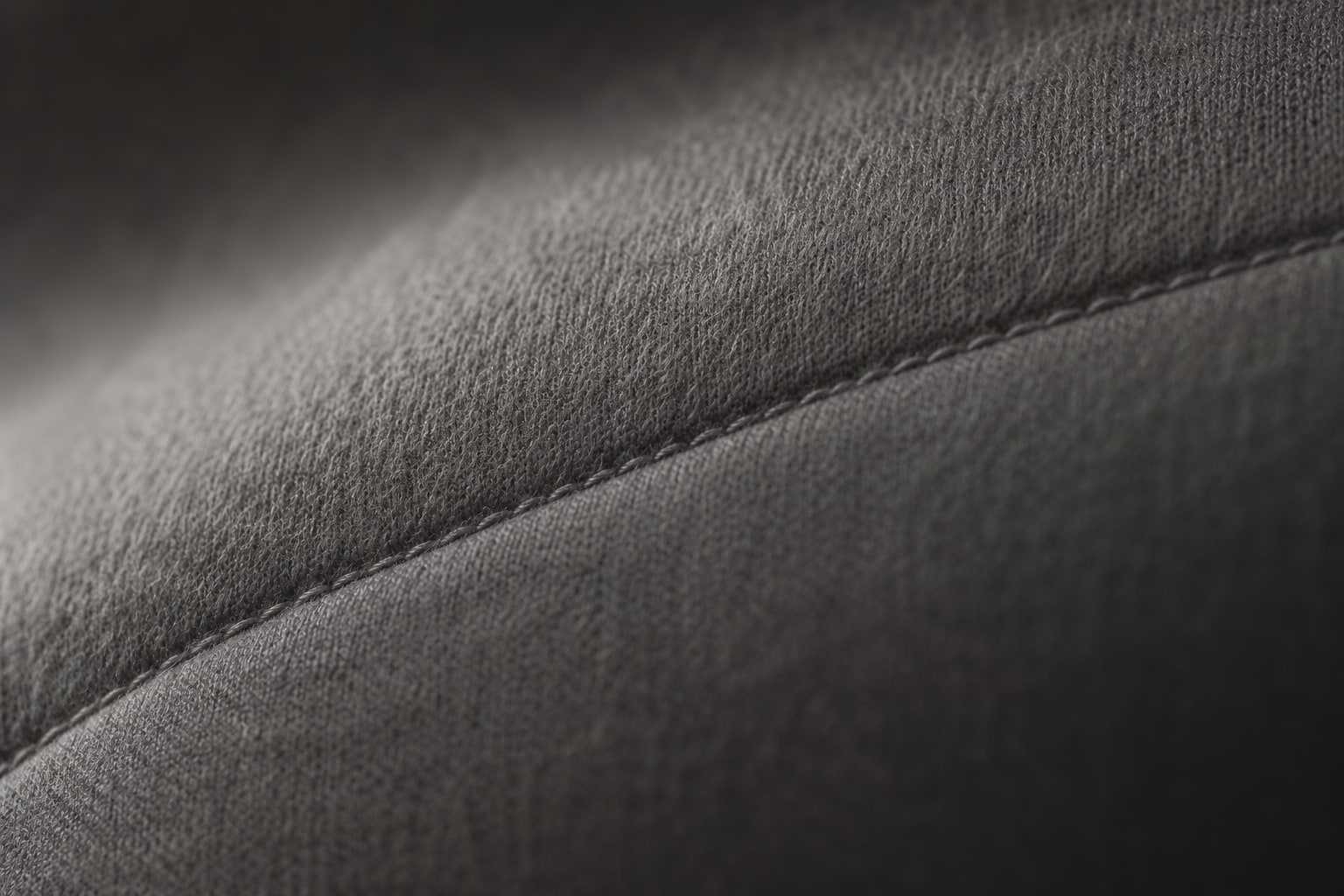
- New foam-backed fabric. New headliner fabric with a foam backing is bonded over the whole surface with heat-resistant adhesive and worked into every curve and recess without wrinkles or bubbles. You can stay close to the original colour or change it – we show the available samples at the workshop. Alcantara and other materials are on request; please ask.
- Refit and check. Everything goes back in, and we check the lights, visors and handles.
Sunroofs and panoramic roofs
On a car with a sunroof, the fabric has to be wrapped and bonded neatly around the opening. The sliding sunshade is usually covered in the same fabric and often sags too, so it makes sense to do both together for an even colour.
If the headliner has water stains or the car smells damp, find the cause first. Typical culprits are blocked sunroof drain tubes or a leaking seal. If the leak stays, water will ruin the new fabric as well. Have it checked before the repair, or mention it when you contact us.
What affects the price
- Size of the car – a hatchback, estate, SUV or van all differ in area.
- Sunroof or panoramic roof – more cutting, wrapping and detail.
- Extra parts – pillars, sun visors, sunshade.
- Condition of the board – sound, or cracked and covered in old glue.
- Material – standard headliner fabric or a material on request.
The quickest way to find out the cost for your car is to send us a few photos. The quote is free.
Keeping the new headliner in shape
- Park in the shade when you can and use a windscreen sunshade in summer.
- Clean with a slightly damp microfibre cloth or a soft brush. Don’t soak it with cleaner – liquid goes through the fabric into the adhesive.
- Fix any sunroof or seal leak straight away.
Our workmanship comes with a 2-year warranty, and the work is done in our own dry, enclosed workshop.
Send us a photo
If your headliner is already coming down, take a couple of photos – close up and from a distance – and send them through the quote page. More about the service: headliner repair.